Sod Cutter : How Professional Turf Cutting Machines Optimize Turf Transplantation

Explore the core working principles, structural design, and technical advantages of professional sod cutters.

Learn how high-quality sod cutting machines from Weifang factory ensure smooth, efficient turf cutting and transplantation for sports fields and landscaping projects.

Sod transplantation is a critical link in modern turf management, landscaping engineering, and sports field construction.

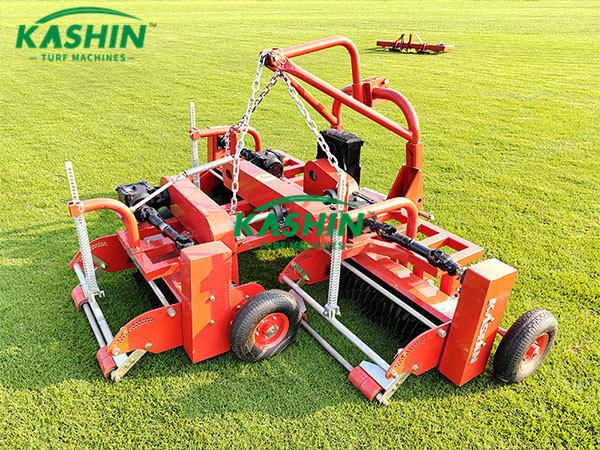
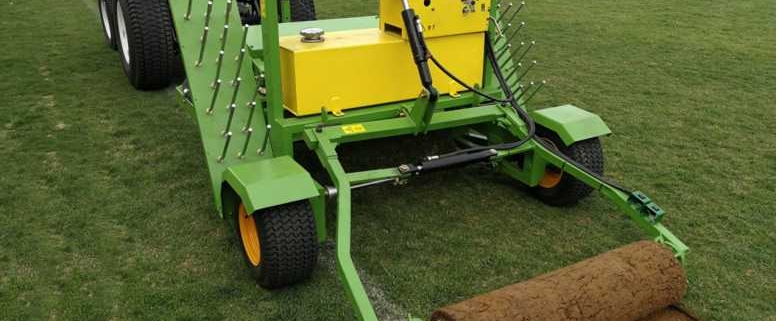
A professional Sod Cutter (turf sod cutter) is an indispensable piece of equipment designed to cut mature, healthy turf into uniform sod strips with intact root systems, laying a solid foundation for efficient turf transplantation and rapid lawn establishment.

1. Core Working Principles of Sod Cutter

Unlike manual turf cutting, which is inefficient and prone to damaging root systems, professional sod cutters adopt a mechanical cutting structure combined with a depth-adjustable system.

The working principle is centered on three core components: the cutting blade assembly, depth control mechanism, and traction system.

The high-strength alloy cutting blade rotates at a constant speed to cut through the soil layer at a preset depth, separating the turf from the subsoil while keeping the root system and attached soil intact.

The depth control system, equipped with precision adjustment levers and locking mechanisms, ensures the cutting depth is consistent across the entire operation surface—typically ranging from 20mm to 100mm, adjustable according to turf type and soil conditions.

For walk-behind models, the self-propelled traction system reduces operator fatigue, while tractor-mounted sod cutters leverage the tractor’s power to achieve high-efficiency, large-area cutting.

2. Key Structural Design Features of High-quality Sod Cutters

Weifang’s professional sod cutter manufacturers adhere to international industrial standards, integrating multiple structural optimizations to enhance equipment performance and durability:

High-strength Cutting Blade: Made of heat-treated manganese steel alloy, the blade has high hardness, wear resistance, and impact resistance, capable of withstanding continuous cutting operations on various soil types (loam, sandy soil, clay) without deformation or blunting.

Precision Depth Adjustment System: Adopts a multi-gear adjustable structure with a clear scale display, allowing operators to adjust the cutting depth accurately to ±1mm, meeting the cutting requirements of different turf varieties (e.g., bentgrass for golf courses, ryegrass for football pitches).

3. Technical Advantages of Professional Sod Cutter

Compared with low-end, low-precision sod cutting equipment, professional sod cutters from Weifang factory offer irreplaceable advantages:

First, high cutting efficiency: A standard walk-behind sod cutter can complete 800-1500 square meters of cutting per hour, while a tractor-mounted model can reach 2000-3000 square meters per hour, far exceeding manual efficiency and reducing labor costs by more than 60%.

Second, high-quality sod strips: Uniform width (typically 300mm-600mm) and consistent thickness ensure the sod has strong transplanting survival rate, with no broken strips or root damage, reducing the waste rate of turf resources.

Third, strong adaptability: Suitable for various scenarios, including golf course greens, fairways, football pitches, residential landscaping, municipal greening projects, and turf production bases, adapting to different terrain conditions (flat ground, gentle slopes).

Fourth, easy maintenance & long service life: The modular design makes it easy to disassemble and replace wearing parts (blades, bearings). The anti-corrosion frame and high-quality components ensure the equipment has a service life of more than 5 years under normal operation.

Professional turf managers and engineering contractors recognize that choosing a reliable sod cutter is the key to ensuring the quality and efficiency of turf transplantation projects.

Weifang, as a professional manufacturing base for turf maintenance equipment in China, has rich experience in R&D and production of sod cutters, providing high-performance equipment solutions for global turf management and landscaping industries.


How to Choose a High-quality Turf Overseeder?

Many turf managers and equipment buyers face the same problem: low-quality overseeder machines cause uneven seeding, low germination rates, turf tearing, and frequent mechanical failures.

Choosing a high-performance turf overseeder is essential for standardized sports turf renovation.

A professional overseeder for golf courses and football fields must meet strict industrial standards in structure, seeding accuracy, and field adaptability. Here are the core factors for purchasing a reliable overseeder machine.

1. Precise Seed Metering System

The core of an excellent overseeder is stable and adjustable seed flow. High-end overseeder equipment supports precise seeding volume adjustment to fit different grass seeds, ensuring even coverage across the entire field. Low-quality machines cause seed accumulation or missing seeding, resulting in uneven turf growth.

2. Adjustable Seeding Depth and Slit Structure

Different turf scenarios require different seeding depths. Golf greens need shallow and fine overseeding, while football fields need deeper slit seeding for root renewal. Qualified sports field overseeder supports multi-grade depth adjustment to adapt to all maintenance requirements.

3. Durable Blade and Anti-corrosion Frame

Field maintenance equipment works in high-intensity outdoor environments. Thickened blades ensure stable slit opening without tearing turf.

The overall galvanized frame effectively prevents rust and deformation, extending machine service life.

4. Universal Tractor Compatibility

Professional tractor-mounted overseeder adopts standard 3-point linkage, compatible with most mainstream tractors worldwide, avoiding secondary modification and improving working efficiency.

As a professional turf equipment factory located in Weifang, we focus on manufacturing industrial-grade overseeder machines for global markets. All equipment is strictly tested for field adaptability, durability, and seeding accuracy.

Tips on choosing professional stadium cleaning equipment

Currently, numerous low-priced, simple lawn sweepers are appearing on the market. Many sports fields have experienced problems after purchasing them, such as easily broken brushes, material leakage, snagging of artificial turf fibers, and ineffective screening. While they may seem to save money in the short term, the costs of maintenance and field repairs double in the long run.

To purchase a professional Turf Sweeper lawn sweeper, adhere to the following stringent standards to avoid common industry pitfalls.

I. Three Common Procurement Pitfalls

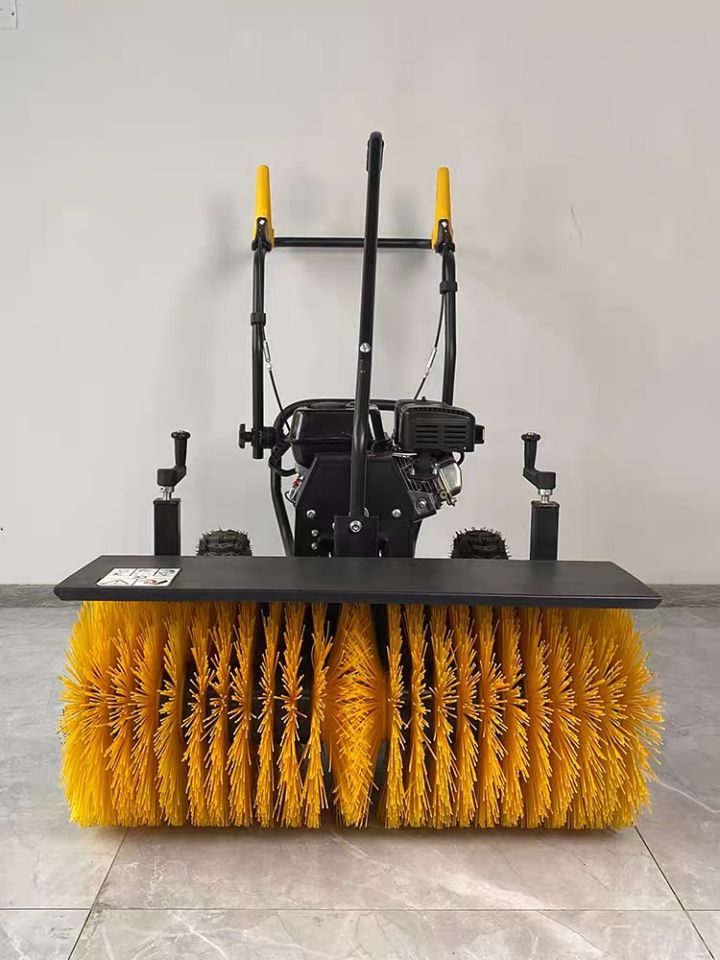
Inferior Brush Material:Ordinary plastic brushes wear out and shed easily, leaving residual bristles that are difficult to clean from the lawn. Professional models use thickened nylon composite brushes, which are wear-resistant for over 3000 hours.

Inadequate Particle Screening Structure:Cheap sweepers directly remove the artificial turf infill sand, requiring extensive sand replenishment annually and significantly increasing maintenance costs.

Thin Frame with Lack of Corrosion Resistance: Thin sheet metal frames rust and deform after rain, causing the machine to veer off course and resulting in uneven cleaning depth.

II. Four Key Selection Criteria for Professional Turf Sweeper

Double-layer screening system: Automatically separates waste from filler particles, collecting only debris while retaining quartz sand and rubber granules;

Adjustable brush height: Lightly sweeps and protects the roots of natural lawns, deeply cleans debris from artificial turf, offering dual functionality;

Sealed large-capacity collection hopper: Convenient unloading, dust-free operation, suitable for schools and high-end golf courses;

Thickened galvanized welded frame: Shock-absorbing and stable, ensuring no deformation during long-term, large-area operation.

III. Advantages of Sourcing directly from the Manufacturer

Weifang Sichuang Machinery’s Turf Sweeper series is manufactured according to international sports field maintenance standards. Each product undergoes a 72-hour field test before leaving the factory to eliminate issues such as material leakage, snagging, and screening failure.

Bulk project purchases are supported, with complete English documentation and customs clearance certificates provided.

To compare different model parameters and obtain the lowest bulk price, please view the [Turf Sweeper Lawn Sweeper Details].

The function of a push-type lawn aerator

I. What is a  Lawn Aerator?

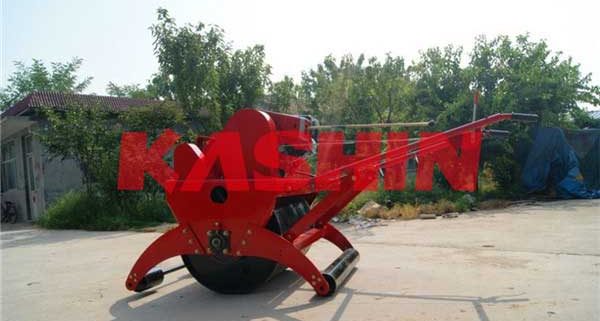
A  lawn aerator is a lightweight, portable lawn aeration and maintenance device that requires no power, unlike large towed aerators. It requires no tractor, fuel, or electricity; it operates entirely by hand and is designed for small lawns, backyard green spaces, residential landscaping, villa lawns, and small school green areas.

Many small lawns suffer from problems such as soil compaction, waterlogging and yellowing, and sparse turf. However, due to the limited space, using large towed aerators is costly, cumbersome, and can easily damage the lawn.

The Sichuang push lawn aerator perfectly solves this problem. It uses high-strength solid aerator needles to roll and pierce the soil, creating even aeration holes and opening up water and fertilizer penetration channels. It is an essential piece of equipment for the refined maintenance of small lawns.

II. Four Core Maintenance Functions of a  Lawn Aerator

1. Breaking Up Shallow Soil Compaction and Restoring Soil Aeration

Lawns in residential courtyards and small green areas of parks are prone to surface soil compaction due to constant pedestrian traffic and daily trampling. This leads to oxygen deficiency, hindering root respiration and causing problems such as widespread yellowing and weak growth.

Using a lawn aerator quickly loosens the compacted surface soil, increasing soil porosity and allowing air to enter the root zone, activating lawn root activity.

2. Solving Waterlogging After Rain and Improving Soil Drainage Capacity

Small lawns are prone to waterlogging after rain due to compacted soil and poor drainage, leading to root rot, bald patches, and moss growth.

Regular push aeration creates dense micropores, accelerating rainwater infiltration and quickly draining surface water, reducing lawn diseases at their source.

3. Improved Water and Fertilizer Utilization, Saving on Maintenance Costs

In compacted lawns, water and fertilizer mostly remain on the soil surface, evaporating quickly, absorbing poorly, and resulting in significant waste. After a hand-push lawn aerator, water and fertilizer can reach the grass roots directly through the holes, significantly improving nutrient absorption. This leads to more even and dense lawn growth, effectively reducing the need for frequent fertilization and watering.

4. Inhibition of Thatch Layer Accumulation, Delaying Lawn Aging

Small backyard lawns, if not properly maintained over a long period, easily accumulate a layer of thatch, hindering soil aeration.

Regular aeration breaks up the surface thatch, accelerates the decomposition of organic matter, improves the lawn’s growing environment, and extends the lawn’s green period and lifespan.


III. Applicable Scenarios and Timing for Hand-Push Lawn Aerators

Suitable Scenarios: Lawns in private villa courtyards, residential lawns, small green areas in school playgrounds, and corner areas of small soccer fields.

Optimal Operating Time: During the vigorous growth periods of spring and autumn, light aeration can be performed monthly for maintenance; the effect is better when the soil is moist after summer rains. Do not attempt to aerate dry, hard, or frozen soil.

Operating Method: Push the lawn agitator at a uniform speed, working in a crisscross pattern to ensure even distribution of holes. After aeration, simple cleaning and watering will accelerate lawn recovery.


IV. Why Choose the Sichuang  Lawn Aerator for Small Lawn Maintenance?

1. High-Strength, Wear-Resistant Aerator Needles: The hardened steel needles are resistant to bending and deformation, ensuring smooth aeration and adaptability to various soil types.

2. Lightweight and Flexible: The machine is easy to maneuver, does not crush the grass, and does not damage the turf, allowing for precise maintenance without affecting the flatness of the site.

3. Excellent Cost-Effectiveness: Affordable, maintenance-free, and with a long service life, it is a high-performance, cost-effective machine for property management, courtyards, and small green spaces.