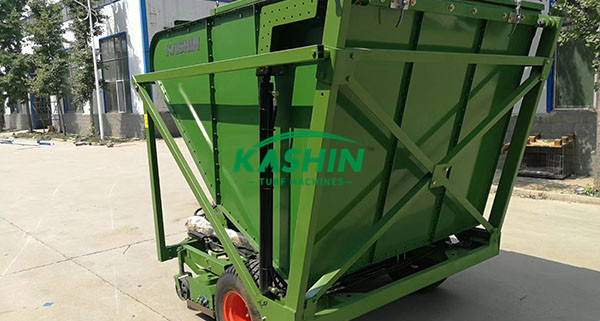
What Is a Turf Brush Sweeper?

A turf brush sweeper, also known as a grass suction sweeper, is a high-frequency maintenance machine widely used on golf courses, soccer fields, natural turf lawns and artificial grass venues.

Many turf managers confuse it with a leaf blower, but they serve completely different purposes.

A leaf blower only blows debris from one spot to another, while a professional **brush sweeper** grooms turf, lifts grass blades, loosens embedded litter and collects all waste into the onboard hopper in one pass.

It has become an indispensable part of a complete turf care equipment fleet, matched together with turf tractors, aerators, topdressers and turf rollers.

What core jobs can a turf brush sweeper finish? First, it cleans surface debris efficiently.

Fallen leaves, grass clippings after mowing, twigs, worm casts and broken grass stems will pile up on the turf canopy.

If left uncleaned, these residues block sunlight, trap moisture and trigger turf fungus diseases such as brown patch and fusarium.

Regular sweeping keeps the turf surface dry and ventilated, greatly lowering disease risks.

Second, it grooms natural turf before mowing.

The rotating soft brush stands up creeping grass stolons and flattened blades.

When the grass is upright, the reel mower can make a cleaner, more uniform cut and avoid grain on putting greens, delivering consistent ball rolling performance for golf players. Third, it tidies synthetic sports turf.

On artificial football fields, sand or rubber infill often compacts and sinks deep into grass fibers.

The brush agitates the infill evenly, restores upright turf fibers and removes dust and small rubbish trapped inside the grass pile.

It also helps clean up after games, removing debris left by athletes and spectators quickly so the field can reopen sooner.

Now let’s look at how a **brush sweeper** works.

Most professional models are tow-behind design, attached to a turf tractor via a standard hitch.

The main components include a rotating cylindrical brush, adjustable height frame, debris collection hopper and discharge control system.

The high-density nylon brush spins at a stable speed as the tractor travels forward.

Operators can adjust brush height precisely: shallow setting for gentle grooming on delicate putting greens, deeper setting for heavy debris pickup on fairways and sports fields. The spinning brush combs through the turf canopy, lifts flattened grass and stirs embedded waste upwards.

A baffle system guides all loose debris into the large-capacity collection hopper.

Once the hopper is full, the operator can lift the container to dump waste conveniently without scattered rubbish back onto the lawn.

Manual raking or cheap small sweepers usually leave behind half the debris and take huge labor costs.

Our brush sweepers from the Weifang factory are built for continuous heavy-duty work, with wear-resistant brush filaments and stable transmission structure.

They can be paired with different horsepower turf tractors, available in multiple working widths for greens, tees, fairways and large sports pitches.

If you want to cut labor time and keep your turf surface neat all year round, contact us for detailed parameters and matching plans of our turf brush sweepers.
How Does a Turf Edger Work?

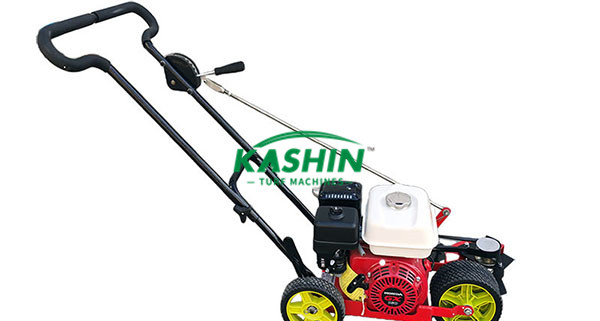
When managing high-standard turf areas such as golf greens, football fields and landscape lawns, many turf managers wonder how a professional **turf edge trimmer** delivers clean, straight cutting edges that ordinary mowers cannot achieve.

Unlike lawn mowers that cut grass horizontally on the turf surface, a **turf edge trimmer** is designed with a vertical rotating blade system, which is the core reason it can shape neat turf boundaries efficiently.

The working principle of the **turf edge trimmer** is straightforward.

Driven by an engine or hydraulic power, the vertical cutting blade spins at a stable high speed.

Most professional **turf edging machine** models are fitted with an adjustable guide wheel beside the blade.

This guide wheel runs along hard boundaries like cart paths, concrete walkways, bunkers or flower bed edges, controlling the cutting depth accurately and preventing the blade from sinking too deep into the soil.

As the operator pushes the machine forward, the rotating vertical blade slices vertically through grass stems, surface roots and a thin layer of topsoil, cutting out a tidy vertical trench between turf and hard surfaces.

It separates creeping turf roots and stops grass from spreading into paths or sand bunkers, which is a frequent headache for golf course superintendents.

For commercial turf maintenance teams, learning standard operating steps is critical to protect both the turf and the **turf edge trimmer**.

Before starting, inspect the blade sharpness, engine oil level and tire pressure of your **golf course maintenance equipment**.

Clear stones, sticks and debris along the edging route to avoid blade damage or flying debris.

Adjust the cutting depth according to turf type; for creeping bentgrass on greens, 2–4 cm depth is usually enough, while sports field turf can take a slightly deeper cut.

Start the machine, align the guide wheel against the boundary line, and walk forward at a steady slow pace.

Do not force the blade into compacted soil; make two shallow passes if the ground is hard.

After finishing each section, rake away cut grass and soil debris to keep drainage smooth.

Regular edging with reliable **turf edge trimmer** equipment improves the overall look of venues and reduces later trimming workload.

If you are looking for durable, low-maintenance **turf edge trimmer** matched for golf courses, football stadiums and large landscape projects, you can contact our team to learn about our full range of turf maintenance machines, including aerators, topdressers and turf rollers.

Why Roll Turf?

Turf rolling is one of the essential maintenance procedures for high-quality turf areas including golf greens, sports fields, lawn nurseries and racecourses.

Many turf managers wonder why rolling cannot be skipped in regular turf care.

The core purposes of turf rolling include smoothing uneven turf surfaces, improving turf rooting contact with topdressing soil, boosting turf density, creating consistent playing speed for greens, and reducing bumpy spots caused by frost heave, earthworm casts or construction settlement.

A well-rolled turf surface delivers stable ball roll on golf courses and lowers injury risks for athletes on football and rugby fields.

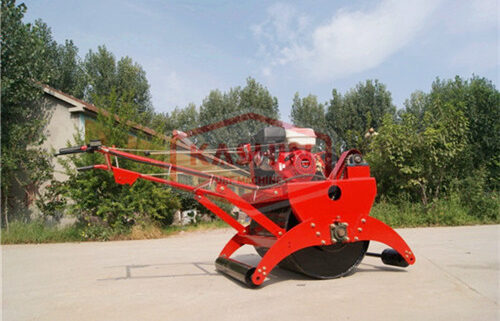
A professional turf roller is engineered to finish this compaction and smoothing task gently without damaging grass crowns.

Most turf rollers adopt a heavy hollow steel or polyethylene drum, which can be filled with water or sand to adjust working weight.

Unlike heavy road rollers, turf rollers feature low ground pressure design.

When the turf tractor pulls the turf roller forward, the rotating drum evenly applies static pressure across the turf surface.

It does not squeeze soil excessively deep; instead, it lightly presses the topsoil and root zone to settle loose topdressing material after top dressing or aeration work.

Some premium models are equipped with scraper blades to prevent soil sticking on the drum surface, keeping rolling uniform across the whole green.

Correct operation determines the final rolling effect and avoids turf damage.

First, choose the right timing: rolling is recommended when the soil is slightly moist but not waterlogged.

Rolling on saturated soil will cause over-compaction and block soil air exchange. Second, set the proper weight.

Golf greens usually use light-weight turf rollers, while sports fields can use medium-weight rollers.

Test on a small hidden area before full-site rolling.

Operate at a low, steady speed, and follow overlapping rolling paths to avoid missed strips.

Do not roll the same spot repeatedly within a single session. After rolling, inspect the turf condition.

Combine rolling with aeration, top dressing and mowing to maintain healthy root zones.

If you are looking for reliable turf rollers matched with your turf tractor for golf and sports turf maintenance, contact our team to get detailed specifications and solutions.

What Are the Benefits of Lawn Topdressing? How Does a Turf Topdresser Work?

For golf courses, football stadiums and large landscape lawns, **lawn topdressing** is an indispensable routine maintenance task, and a professional **turf topdresser** is the core machine to finish this job efficiently.

Many turf managers know they need to spread topdressing material on grass surfaces, but they may not fully understand the multiple benefits of lawn topdressing and exactly how a **turf top dressing machine** operates.

Topdressing means spreading a thin, uniform layer of sand, soil or sand-soil mix over the turf surface.

The first major benefit of **lawn topdressing** is smoothing uneven turf surfaces.

Heavy foot traffic, frequent mowing and turf aeration leave bumps, depressions and uneven ground on putting greens or sports fields. Topdressing fills these low spots, creates a flat playing surface, and reduces scalping damage caused by mowers.

Secondly, regular **golf green topdressing** controls thatch buildup.

Thatch layer blocks water, air and nutrients from reaching grass roots.

The fine topdressing material mixes with the thatch layer, speeds up microbial decomposition and keeps the thatch thickness within a healthy range.

Topdressing also improves soil structure. For clay-heavy soil, sand-based topdressing increases drainage; for sandy soil, organic mix helps retain moisture and fertilizer.

In addition, it protects grass crowns, promotes new leaf growth and speeds up turf recovery after aeration or overseeding.

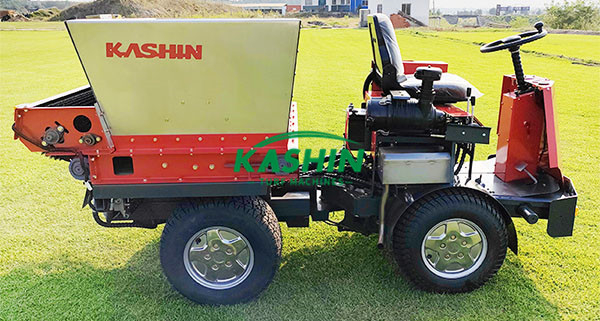
A standard **turf topdresser** is usually designed as a tractor-towed or self-propelled unit.

The machine has a large hopper to store topdressing materials such as sand, rootzone mix or compost.

Inside the hopper, rotating augers or feed rollers meter out material at a controllable rate.

The material drops onto spinning distribution discs, which throw the soil/sand evenly across the lawn surface.

Operators can adjust the material output rate, spreading width and speed according to turf type and job requirements.

A quality **turf top dressing machine** avoids material piling or uneven coverage, preventing smothering of turfgrass.

If you are looking for reliable **turf topdresser** equipment for your golf course or sports turf maintenance project, contact our team to get machine parameters and operation recommendations.

How Does a Lawn Aerator Work? Understand the Core Working Principle of Turf Core Aeration

If you manage golf greens, sports turf or large park lawns, you must have heard of **lawn aerator**, also called **turf aeration machine**.

Many turf supervisors know aeration is essential for healthy grass, yet they do not fully understand how a **core aerator** works underneath the turf surface.

Soil compaction is the biggest enemy of high-quality turf. Constant foot traffic, rolling of turf tractors, repeated mowing and rainfall squeeze soil particles tightly together.

Pores in the soil shrink, oxygen cannot reach grass roots, irrigation water and fertilizer stay on the surface instead of penetrating down.

Over time, turf roots become short and weak, thatch accumulates fast, puddles appear after rain, and the lawn turns yellow and thin easily. This is where a professional **lawn aerator** comes into play.

The mainstream commercial **core aerator** adopts hollow tine design.

Powered by engine or connected with turf tractor as a towed implement, the machine drives hollow metal tines vertically into the turf and root zone.

As tines penetrate the soil, they extract small cylindrical soil plugs, then lift the soil cores out and leave them on the lawn surface.

Uniform holes are created across the turf after the machine passes.

Solid spike aerators only poke holes and squeeze surrounding soil, which may re-close holes quickly.

But the hollow-tine **turf aeration machine** physically removes soil plugs, creating stable vertical channels.

These channels allow air, water and nutrients to flow directly to deep root zones.

The leftover soil plugs will break down naturally, helping decompose thatch and add organic matter back into topsoil.

For golf course aeration work, working depth, tine spacing and operation speed directly affect turf recovery cycle.

Different venues need matched aerator models.

If you are looking for reliable **lawn aerator** equipment for your golf course or sports field maintenance, contact our team to get detailed machine specifications and operation guidance.

Brief Discussion on Annual Maintenance Management Key Points for Bentgrass Putting Green

High-quality **bentgrass putting green maintenance** is the core work for every golf course superintendent.

Bentgrass on putting greens has extremely high requirements for soil structure, surface flatness, moisture, nutrient balance and trimming management.

Tiny unevenness, excessive thatch, poor drainage or compaction will directly affect ball roll, increase disease risk and destroy the overall quality of golf greens.

Many golf facilities struggle with unstable green quality all year round: patchy discoloration, slow recovery after aeration, uneven putting surface and frequent fungal outbreaks.

A complete set of seasonal **golf green turf care** plans, combined with professional turf equipment pulled by **turf tractor**, can keep your bentgrass green smooth, dense and stable through four seasons.

### Spring: Wake up bentgrass, repair winter damage and lay foundation

When snow melts and soil thaws, spring maintenance starts immediately.

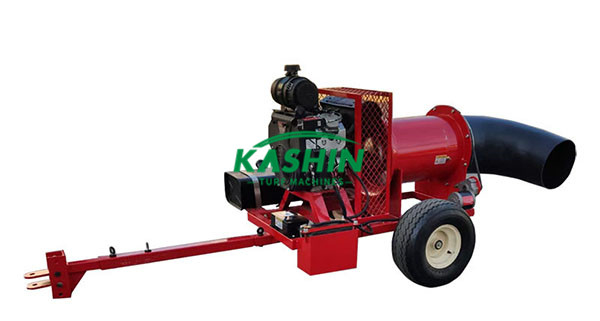
First, inspect the whole putting green to check snow mold, dead grass, low-lying waterlogged areas and surface undulations. Dead leaves, straw and organic debris covering bentgrass will block sunlight, reduce soil temperature and delay grass green-up. Use **turf blower** to quickly clear all litter and dead grass residues from the green surface. Manual cleaning takes enormous labor and may hurt fragile bentgrass crowns; **turf blower** can finish large-area cleaning efficiently without damaging turf.

KASHIN turf blower,leaf blower,grass blower

After cleaning, check soil compaction and thatch depth.

Bentgrass greens easily accumulate thatch. When thatch exceeds 10mm, core aeration and light topdressing are necessary. After aeration, apply fine sand topdressing, and use **turf drag mat** pulled by **turf tractor** to spread sand evenly, fill aeration pores and blend sand into bentgrass canopy. This operation dilutes thatch, improves soil permeability and helps roots activate faster.

Check surface drainage in early spring.

Melting snow and spring rain easily gather in depressions, leading to root rot of bentgrass. The **lazer grader blade** mounted on **turf tractor** can precisely level small bumps and low spots of putting greens, optimize surface slope and eliminate standing water. After grading, use **field top maker** for gentle rolling, stabilize the topdressing layer and create a smooth putting plane without compacting the root zone. During spring renovation, **turf trailer** helps transport fine sand, fertilizer and seeds conveniently.

Fertilization in spring must be controlled strictly.

Do not apply high nitrogen fertilizer too early. Choose slow-release starter fertilizer to promote root growth instead of fast leaf growth. Keep following the one-third mowing rule and gradually reduce mowing height as bentgrass grows steadily.

### Summer: Heat stress control, disease prevention and surface protection

Summer high temperature is the biggest threat for bentgrass.

Bentgrass is cool-season turf, vulnerable to heat stress. Raise cutting height slightly in hot weather to protect grass crowns. Reduce nitrogen application, increase potassium supply to improve heat resistance. Water deeply in early morning instead of frequent shallow irrigation, avoid long-time leaf wetness to prevent brown patch and dollar spot disease.

Carry out light needle-tine aeration in summer to relieve mild compaction, avoid heavy hollow coring which causes long recovery time.

Inspect putting green surface every day, repair ball marks and divots timely. Before golf tournaments, use **field top maker** to refine surface smoothness, guarantee consistent ball roll for players. Clean grass clippings and dew residue with **turf blower** every morning.

### Autumn: Thatch reduction, root reserve accumulation for winter

Autumn is the golden period for bentgrass to store nutrients and strengthen roots.

Carry out core aeration and topdressing again for greens with thick thatch. Use **turf drag mat** to spread sand dressing uniformly. Remove fallen leaves continuously with **turf blower**, because fallen leaves cover bentgrass and easily trigger snow mold in winter.

Switch fertilizer formula to high-potassium winter fertilizer, reduce nitrogen dosage gradually. Slowly raise the mowing height as temperature drops.

Clean drainage channels, check surface flatness, repair small depressions by **lazer grader blade** before winter arrives. Use **turf trailer** to transport sand and maintenance supplies for autumn turf renovation.

### Winter: Dormancy protection & equipment maintenance

Bentgrass enters dormancy in winter. Avoid heavy machine driving and foot traffic on frozen putting green.

Pressure on frozen bentgrass crowns will form large dead patches in spring. During off-season, inspect and maintain your whole equipment fleet: **turf tractor**, **turf drag mat**, **lazer grader blade**, **field top maker**, **turf blower** and **turf trailer**. Repair and replace worn parts, so you can start spring **bentgrass putting green maintenance**