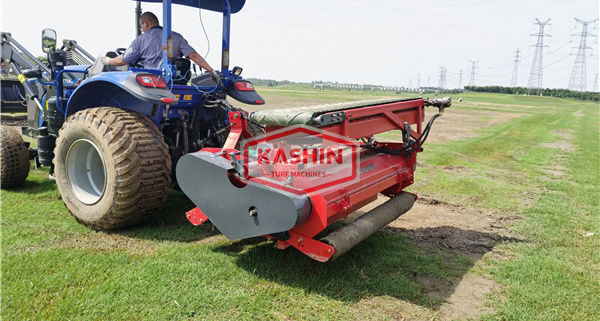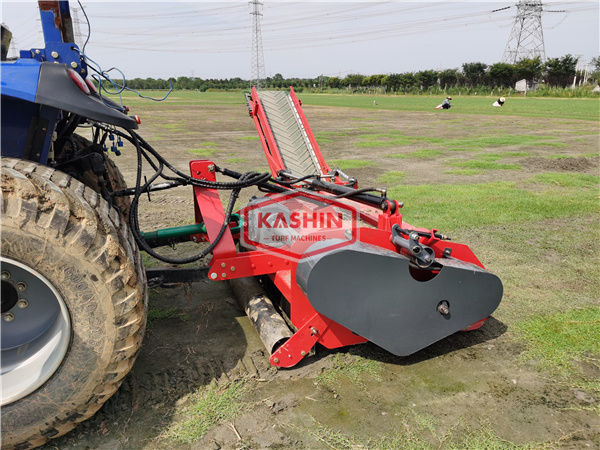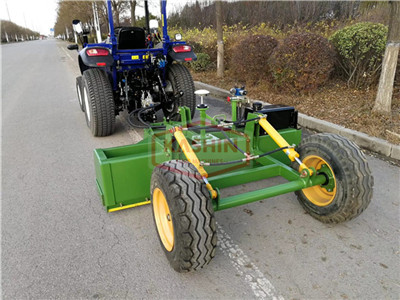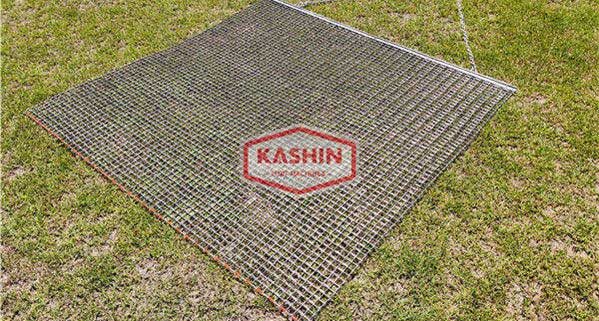
Tips on choosing professional stadium cleaning equipment

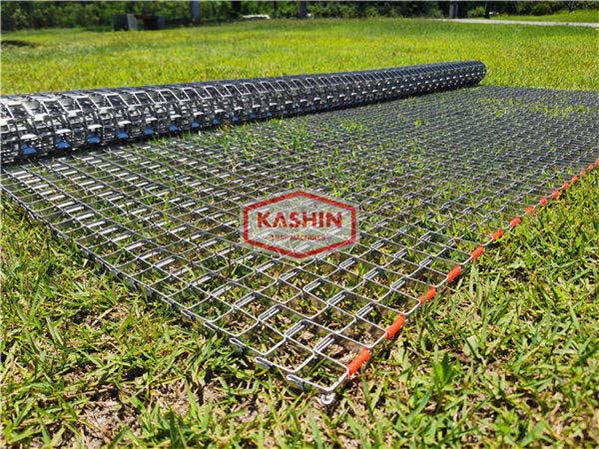
Currently, numerous low-priced, simple lawn sweepers are appearing on the market. Many sports fields have experienced problems after purchasing them, such as easily broken brushes, material leakage, snagging of artificial turf fibers, and ineffective screening. While they may seem to save money in the short term, the costs of maintenance and field repairs double in the long run.

To purchase a professional Turf Sweeper lawn sweeper, adhere to the following stringent standards to avoid common industry pitfalls.

I. Three Common Procurement Pitfalls

Inferior Brush Material:Ordinary plastic brushes wear out and shed easily, leaving residual bristles that are difficult to clean from the lawn. Professional models use thickened nylon composite brushes, which are wear-resistant for over 3000 hours.

Inadequate Particle Screening Structure:Cheap sweepers directly remove the artificial turf infill sand, requiring extensive sand replenishment annually and significantly increasing maintenance costs.

Thin Frame with Lack of Corrosion Resistance: Thin sheet metal frames rust and deform after rain, causing the machine to veer off course and resulting in uneven cleaning depth.

II. Four Key Selection Criteria for Professional Turf Sweeper

Double-layer screening system: Automatically separates waste from filler particles, collecting only debris while retaining quartz sand and rubber granules;

Adjustable brush height: Lightly sweeps and protects the roots of natural lawns, deeply cleans debris from artificial turf, offering dual functionality;

Sealed large-capacity collection hopper: Convenient unloading, dust-free operation, suitable for schools and high-end golf courses;

Thickened galvanized welded frame: Shock-absorbing and stable, ensuring no deformation during long-term, large-area operation.

III. Advantages of Sourcing directly from the Manufacturer

Weifang Sichuang Machinery’s Turf Sweeper series is manufactured according to international sports field maintenance standards. Each product undergoes a 72-hour field test before leaving the factory to eliminate issues such as material leakage, snagging, and screening failure.

Bulk project purchases are supported, with complete English documentation and customs clearance certificates provided.

To compare different model parameters and obtain the lowest bulk price, please view the [Turf Sweeper Lawn Sweeper Details].

The function of a push-type lawn aerator

I. What is a  Lawn Aerator?

A  lawn aerator is a lightweight, portable lawn aeration and maintenance device that requires no power, unlike large towed aerators. It requires no tractor, fuel, or electricity; it operates entirely by hand and is designed for small lawns, backyard green spaces, residential landscaping, villa lawns, and small school green areas.

Many small lawns suffer from problems such as soil compaction, waterlogging and yellowing, and sparse turf. However, due to the limited space, using large towed aerators is costly, cumbersome, and can easily damage the lawn.

The Sichuang push lawn aerator perfectly solves this problem. It uses high-strength solid aerator needles to roll and pierce the soil, creating even aeration holes and opening up water and fertilizer penetration channels. It is an essential piece of equipment for the refined maintenance of small lawns.

II. Four Core Maintenance Functions of a  Lawn Aerator

1. Breaking Up Shallow Soil Compaction and Restoring Soil Aeration

Lawns in residential courtyards and small green areas of parks are prone to surface soil compaction due to constant pedestrian traffic and daily trampling. This leads to oxygen deficiency, hindering root respiration and causing problems such as widespread yellowing and weak growth.

Using a lawn aerator quickly loosens the compacted surface soil, increasing soil porosity and allowing air to enter the root zone, activating lawn root activity.

2. Solving Waterlogging After Rain and Improving Soil Drainage Capacity

Small lawns are prone to waterlogging after rain due to compacted soil and poor drainage, leading to root rot, bald patches, and moss growth.

Regular push aeration creates dense micropores, accelerating rainwater infiltration and quickly draining surface water, reducing lawn diseases at their source.

3. Improved Water and Fertilizer Utilization, Saving on Maintenance Costs

In compacted lawns, water and fertilizer mostly remain on the soil surface, evaporating quickly, absorbing poorly, and resulting in significant waste. After a hand-push lawn aerator, water and fertilizer can reach the grass roots directly through the holes, significantly improving nutrient absorption. This leads to more even and dense lawn growth, effectively reducing the need for frequent fertilization and watering.

4. Inhibition of Thatch Layer Accumulation, Delaying Lawn Aging

Small backyard lawns, if not properly maintained over a long period, easily accumulate a layer of thatch, hindering soil aeration.

Regular aeration breaks up the surface thatch, accelerates the decomposition of organic matter, improves the lawn’s growing environment, and extends the lawn’s green period and lifespan.


III. Applicable Scenarios and Timing for Hand-Push Lawn Aerators

Suitable Scenarios: Lawns in private villa courtyards, residential lawns, small green areas in school playgrounds, and corner areas of small soccer fields.

Optimal Operating Time: During the vigorous growth periods of spring and autumn, light aeration can be performed monthly for maintenance; the effect is better when the soil is moist after summer rains. Do not attempt to aerate dry, hard, or frozen soil.

Operating Method: Push the lawn agitator at a uniform speed, working in a crisscross pattern to ensure even distribution of holes. After aeration, simple cleaning and watering will accelerate lawn recovery.


IV. Why Choose the Sichuang  Lawn Aerator for Small Lawn Maintenance?

1. High-Strength, Wear-Resistant Aerator Needles: The hardened steel needles are resistant to bending and deformation, ensuring smooth aeration and adaptability to various soil types.

2. Lightweight and Flexible: The machine is easy to maneuver, does not crush the grass, and does not damage the turf, allowing for precise maintenance without affecting the flatness of the site.

3. Excellent Cost-Effectiveness: Affordable, maintenance-free, and with a long service life, it is a high-performance, cost-effective machine for property management, courtyards, and small green spaces.

The exhibition concluded successfully.

The 2026 Weifang Urban Area Agricultural Machinery Exhibition kicked off successfully, featuring the debut of Weifang Sichuang Machinery‘s all-new remote-controlled lawn mower.

Capable of intelligent, unmanned mowing and operation on steep slopes—while offering high efficiency and labor savings—the machine attracted numerous inquiries and business discussions from both domestic and international clients.

The 2026 Weifang Urban Large-Scale Agricultural Machinery Exhibition recently opened with great fanfare. Bringing together top-tier local manufacturers of agricultural machinery, landscaping equipment, and smart maintenance systems, the event showcased the latest achievements in industry automation and mechanization, creating a high-efficiency platform for networking and business matching among industry buyers, contractors, and foreign trade distributors.

As a specialized manufacturer of smart maintenance equipment for sports fields and landscapes, Weifang Sichuang Machinery unveiled its flagship new product at the exhibition: the smart remote-controlled mower. This unit quickly became a focal point of interest among the smart maintenance equipment on display.

With advantages such as unmanned operation, safety, labor efficiency, steep-slope capability, and high mowing performance, the equipment attracted a large number of visitors who stopped to observe, consult, and discuss technical details on-site.

Unlike traditional walk-behind or towed mowers, this remote-controlled model utilizes wireless smart controls for long-distance operation. It effectively resolves key industry pain points, including operator fatigue, the dangers of working in high heat, the inability to mow steep slopes, and high labor costs.

Compact, agile, and powerful, the machine delivers uniform mowing results. It is suitable not only for flat areas like soccer fields, golf courses, and public parks but also excels at clearing weeds on slopes, riverbanks, wasteland, and complex terrain. It stands out as a popular smart equipment choice for upgrading maintenance operations in landscaping, sports facilities, and municipal sectors in 2026.

At the exhibition, Sichuang Machinery’s technical team provided detailed explanations to visiting clients regarding the remote control range, mowing height adjustment, climbing ability, battery life, structural design, and maintenance requirements. They also demonstrated the efficiency differences between traditional manual mowing and smart remote-controlled mowing.

Municipal engineering firms, landscaping companies, sports facility operators, and foreign trade distributors expressed strong approval of the Sichuang remote-controlled mower, resulting in multiple preliminary cooperation agreements being reached on-site.

What is the function of a turf aerator?

1. What is a Turf Aerator?

The turf aerator is essential maintenance equipment for ensuring soil aeration at golf courses, natural-grass soccer fields, and professional sports arenas; it is also a core tool for meeting international standards in turf aeration maintenance.

Turf maintenance staff often confuse aerators with verti-cutters. While the turf aerator focuses on vertical coring to aerate and loosen deep soil, the verti-cutter targets surface-level root cutting and thatch removal; using them in tandem ensures comprehensive maintenance across both shallow and deep soil layers.

The Sichuang Turf Aerator utilizes a hollow-tine design. During operation, it vertically penetrates the root zone to extract cylindrical soil cores, creating uniform aeration holes across the surface without causing extensive turf damage or tearing grass blades. It is the safest and most effective professional solution for addressing issues such as soil compaction, waterlogging, and root suffocation.

II. Why Must Sports Fields Be Aerated Regularly? Four Key Benefits of Turf Aerators

1. Breaking Up Soil Compaction and Restoring Airflow

Sports fields and golf fairways suffer from constant foot traffic and vehicle use, leading to increased soil density. This creates an oxygen-deprived environment where roots cannot breathe, causing the turf to yellow, thin out, and deteriorate over time.

Using a professional turf aerator breaks up compacted soil layers and increases porosity, allowing air to reach the root zone and revitalizing root activity.

2. Resolving Water Accumulation and Improving Drainage

Soil compaction is the primary cause of water pooling on fields; after rain, surface water cannot infiltrate the soil. Prolonged waterlogging leads to root rot, patchy turf loss, and disease outbreaks.

Regular aeration creates a network of holes that rapidly channel away rainwater and irrigation water, solving the drainage problem at its source and increasing the field’s usability during the rainy season.

3. Enhancing Water and Nutrient Absorption to Lower Maintenance Costs

On compacted, unaerated turf, applied water and fertilizer often remain on the surface, leading to rapid evaporation and poor absorption rates.

Aeration allows water and nutrients to travel directly to the root zone. This doubles nutrient utilization efficiency, effectively reducing fertilizer waste and lowering daily maintenance expenses.

4. Promoting Deep Root Growth and Extending Turf Lifespan

Compacted soil restricts roots to shallow growth, resulting in poor resilience against foot traffic and environmental stress.

Aeration provides ample space for roots to grow deep into the soil. This results in denser, more resilient turf with significantly improved traffic tolerance, drastically reducing the frequency of costly turf renovation and reseeding.

III. Standard Operating Procedures and Maintenance Timing for Lawn Aerators

Optimal Operating Seasons: Spring and autumn are the best times, as the grass is in a period of vigorous growth, temperatures are favorable, and recovery is rapid. Light aeration may be performed during the high temperatures of summer, but operations are prohibited in winter when the soil is frozen.

Professional football pitches require deep aeration maintenance twice a year, while golf greens and fairways undergo aeration 2–3 times annually, depending on the thickness of the thatch layer.

Operational Standards: A longitudinal and transverse cross-aeration pattern is employed to ensure uniform hole distribution with no missed areas. Aeration depth is adjusted based on the root zone profile, allowing for flexible switching between shallow aeration and deep soil loosening.

Integrated Maintenance Workflow: Following aeration, a topdresser is used to fill holes with sand and level the surface, followed by light rolling with a turf roller to quickly restore the field’s smoothness and aesthetic appeal. This entire process fully complies with maintenance standards for tournament-grade venues.

IV. Aeration and Maintenance: Why Choose the Sichuang Turf Aerator?

The Turf Aerator, independently developed and manufactured by Weifang Sichuang Machinery, fully meets international standards for sports turf maintenance and is designed to handle the specific operating conditions of various golf courses and football fields in China:

1. High-strength alloy tines: Hard and wear-resistant, resistant to bending; ensures smooth, vertical penetration and clean core extraction without clogging the holes;

2. Precisely adjustable aeration depth and spacing: Suitable for diverse applications, ranging from delicate aeration on putting greens to deep soil loosening on football fields;

3. Wide-coverage towed design: Delivers high operational efficiency on large areas, significantly saving on labor costs and reducing maintenance time;

4. Heavy-duty, corrosion-resistant frame: Features low vibration, stable operation, and a low failure rate, making it ideal for long-term, high-frequency outdoor use.

turf aerator ,aerator billy goat

Lawn maintenance machinery

I. Key Policy Shifts in 2026 Reshape the Turf Maintenance Equipment Sector

In 2026, the “National IV” emission standards for non-road mobile machinery will become fully mandatory domestically; all fuel-powered maintenance equipment used on golf courses and soccer fields must comply with these environmental limits.

This policy effectively eliminates a large number of products from small workshops—characterized by outdated technology and non-compliant emissions—thereby significantly raising the industry’s barrier to entry.

Simultaneously, policies promoting national fitness and the development of a sports powerhouse continue to be implemented, driving a wave of new construction and renovation for school soccer fields, community sports parks, and standardized golf training facilities across the country.

The Evaluation Standards for Green Stadium Construction explicitly mandate mechanized turf maintenance as a strict criterion for facility acceptance, transforming professional sports field maintenance equipment from an “optional accessory” into essential infrastructure for these venues.

In the past, many small-to-medium-sized venues relied on small construction rollers and simple manual tools to cut costs—substituting them for professional equipment—but such practices no longer meet facility audit standards.

Professional zone-specific maintenance equipment—including green rollers, fairway turf rollers, topdressers, verti-cutters, and towed turf brushes—now forms a standardized, comprehensive maintenance system, making “package procurement” the industry’s dominant purchasing model.


II. Two Major Structural Shifts in the Industry and Rising Market Demand

Concentrated Equipment Replacement at Existing Facilities

Equipment at domestic golf clubs and professional football training bases that have been in operation for over five years is reaching the end of its service life. Aging equipment suffers from issues such as excessive emissions, severe wear and tear, and poor maintenance performance, setting the stage for a wave of concentrated equipment replacement throughout 2026. When making purchases, clients are moving beyond a focus on low prices to prioritize four key indicators: corrosion resistance, operational precision, environmental compliance, and comprehensive after-sales service.

Domestic Equipment Accelerating Import Substitution

In the past, high-end venues predominantly purchased maintenance machinery imported from Europe and the US; however, these imports came with high price tags, long lead times for spare parts, and slow after-sales response.

Today, leading domestic manufacturers have achieved comprehensive technological breakthroughs. Domestic equipment offering comparable performance costs only one-third of the price of imports and includes on-site setup and rapid parts replacement. Consequently, an increasing number of standard 18-hole courses and professional tournament venues are choosing to source directly from domestic manufacturers.

III. Keeping Pace with Industry Evolution: Weifang Sichuang Machinery Delivers a Fully Compliant Sports Turf Maintenance Equipment Lineup

As a local Weifang manufacturer specializing in the R&D and production of sports turf machinery, Weifang Sichuang Machinery has fully aligned its entire product line with 2026 environmental regulations and field standards. Our equipment is perfectly suited for the renovation and construction of sports fields nationwide; please visit the [Weifang Sichuang Machinery Official Website] to view complete product cases.

1. Full Equipment Lineup Compliant with National IV Environmental Standards; Lithium-Powered Custom Options Available

Our range—including topdressers, turf rollers, verti-cutters, and towed turf brushes—features internal combustion models that fully meet National IV emission standards.

2. Standardized Equipment Sets: A One-Stop Solution for the Entire Turf Maintenance Workflow

Our products cover every stage of maintenance, from precision putting green care and large-scale soccer field leveling to deep root cutting and surface dethatching. Eliminate the hassle of sourcing from multiple vendors and enjoy exclusive discounts on bulk package purchases.

3. Heavy-Duty, Corrosion-Resistant Design Suitable for Diverse Climates Across the Country

Equipment frames undergo comprehensive galvanizing and anti-corrosion treatment, while core components—such as rollers, brushes, and blades—are reinforced for wear resistance. This ensures stable, long-term performance in rainy or windy/sandy environments, significantly reducing future maintenance and replacement costs.

4. Rapid Local After-Sales Support: Solving Maintenance Challenges Associated with Imported Equipment

We offer full-machine warranties and maintain a comprehensive stock of genuine spare parts. Our rapid response to equipment issues ensures no disruption to daily turf maintenance or tournament preparations.

The Verti-Cutter is the core of the turf.

I. New Trends in Sports Field Maintenance for 2026: Shifting from “Surface Mowing” to “Root System Enhancement”

In recent years, standards for sports field turf maintenance in China have undergone a comprehensive upgrade, marking a definitive move away from the crude, “mow-only” approach that neglected root health.
An increasing number of venues have realized that issues such as yellowing, thinning, poor disease resistance, waterlogging after rain, and low traffic tolerance stem not from mowing practices, but from root zone compaction and the accumulation of thatch.

As major stadiums, sports complexes, and campus athletic fields launch turf root enhancement projects in 2026, the vertical cutter—the only professional machine capable of linear deep-root aeration, breaking up compaction, and removing thatch—has become an essential component of annual maintenance. It now ranks alongside top-dressers,and rakes as one of the four core pieces of equipment for sports field maintenance.


II. Industry Trends: Why Is the Procurement of Verti-Cutter Equipment Skyrocketing Year by Year?

1. Essential Need for Renovating Aging Facilities

Sports fields in operation for over five years commonly suffer from issues such as aging root systems, soil compaction, and excessive thatch accumulation. Simple fertilization and irrigation are no longer effective; vertical cutting (verti-cutting) is required to break up compacted soil and rejuvenate root systems, making it the optimal, cost-effective solution for improving the quality of older facilities.

2. Stricter Standards for Tournament Venue Inspections

Professional tournaments, youth leagues, and school competitions now demand higher standards regarding turf evenness, density, drainage, and overall health. Regular verti-cutting maintenance has become a standard performance metric for venues; facilities lacking proper root system maintenance struggle to pass official tournament inspections.

3. Significant Reduction in Turf Renovation Costs

In the past, fields required turf renovation every 2–3 years, incurring extremely high costs. Implementing standardized verti-cutting maintenance once or twice a year can effectively extend the turf’s lifespan by 3–5 years, drastically reducing overall operations and maintenance costs while offering exceptional value.

III. Industry Equipment Evolution: Rapid Phase-out of Subpar, Basic Root-Cutting Equipment

As standardized maintenance practices become widespread, low-cost, rudimentary root-cutting equipment—characterized by poor-quality blades and a lack of precision adjustment—is being rapidly phased out of the market due to issues such as turf damage, poor maintenance results, and high failure rates.

Customer priorities have shifted from seeking low prices to valuing equipment that protects the turf, delivers excellent results, offers long-term durability, and comes with comprehensive after-sales support; this shift is the key reason behind the sustained strong sales of Weifang Sichuang Machinery Equipment.

III. Industry Equipment Evolution: Rapid Phase-out of Subpar, Basic Root-Cutting Equipment

As standardized maintenance practices become widespread, low-cost, rudimentary root-cutting equipment—characterized by poor-quality blades and a lack of precision adjustment—is being rapidly phased out of the market due to issues such as turf damage, poor maintenance results, and high failure rates.

Customer priorities have shifted from seeking low prices to valuing equipment that protects the turf, delivers excellent results, offers long-term durability, and comes with comprehensive after-sales support; this shift is the key reason behind the sustained strong sales of Weifang Sichuang Machinery Equipment.