
A Complete Seasonal Turf Management Plan for Golf Courses and Sports Fields
High-quality professional turf management is never a one-time job, but a year-round systematic program tailored to local climate, grass varieties and field usage intensity.
For golf courses, football pitches, rugby grounds and multi-purpose sports complexes, stable, resilient turf directly impacts player safety, game experience and the overall aesthetic value of the venue.
Many grounds supervisors often encounter recurring problems: patchy grass growth, poor underground drainage, serious soil compaction, excessive thatch accumulation and slow turf recovery after heavy foot traffic.
A scientific seasonal sports turf maintenance schedule, combined with supporting professional turf machinery, can effectively cut long-term turf renovation costs, reduce chemical input, and greatly extend the service life of your sports turf.
Spring is the critical recovery window for turf to wake up from winter frost and dormancy. Once snow and frost fully disappear, the first step is to carry out a comprehensive field inspection.
Walk through every zone of the whole site, carefully mark dead grass patches, poor drainage areas, surface low spots, and regions with severe soil compaction.
Frost damage often hides under the grass canopy; starting mowing or heavy field work too early will tear fragile grass crowns and leave permanent bare spots that take months to repair.
When soil temperature steadily rises to the suitable range for grass activity, you can begin core aeration to relieve soil compaction.
Aeration creates pores inside soil, boosts oxygen infiltration, stimulates deep root development and improves water and nutrient absorption.
Right after aeration work, sand-based topdressing is usually applied. Use turf drag mat pulled by turf tractor to spread the topdressing material evenly across the whole field, working sand into aeration holes to accelerate turf healing.
Meanwhile, turf blower quickly clears soil plugs, broken grass and surface debris generated in aeration, saving massive manual cleaning time.
If there are obvious undulations and sunken areas on the field surface, the lazer grader blade will help level the ground accurately, preventing rainwater pooling and muddy patches in the upcoming rainy season.
For cool-season grass varieties, overseeding should be arranged after aeration and topdressing. Select grass seeds matching local climate and field wear level.
Apply balanced starter fertilizer that prioritizes root development instead of fast leaf growth.
Set up reasonable irrigation plans for light and frequent watering, to keep seedbed moist without washing seeds away.

Follow the classic one-third mowing rule: never cut more than one-third of the grass blade height in a single mowing operation.
Summer brings high temperature, strong sunlight, heavy match schedules, high disease pressure and water shortage, which are the biggest challenges of sports turf maintenance.
You need to slightly raise the mowing cutting height to protect the root zone from sunburn.
Lower cutting height under hot weather will increase heat stress and weaken turf resistance sharply. Check thatch thickness every week.
Thick thatch locks extra moisture and creates favorable conditions for fungal diseases such as brown patch and dollar spot. Light vertical mowing can reduce organic buildup without hurting healthy turf roots.
Irrigation management decides turf survival in summer.
Deep and infrequent watering encourages roots to grow down deeper, unlike short daily sprinkling that keeps roots staying on the shallow surface.
Watering should be scheduled in the early morning, which reduces water evaporation and avoids long-time leaf wetness overnight to control disease risk.
For high-traffic sports fields, arrange regular rest periods between competitions to reduce continuous wear. Before major tournaments, use field top maker to gently roll and finish the surface, maintaining stable firmness and smoothness for matches.
Autumn is the best season to build nutrient reserves and strengthen turf roots before winter dormancy. Many field teams ignore autumn maintenance work and suffer weak turf recovery in the next spring.
For heavily used sports fields, secondary aeration and topdressing can be carried out again to repair thin grass zones. Fallen leaves must be removed regularly by turf blower.
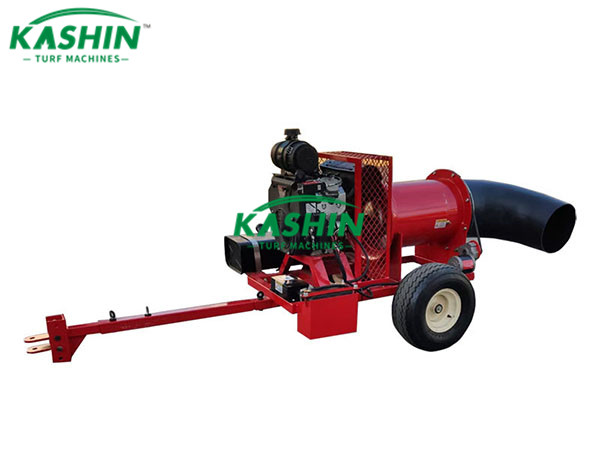
Leaf cover blocks sunlight, traps moisture on grass blades and easily causes mold and winter kill. Switch fertilizer formula to high potassium and low nitrogen blend; potassium thickens grass cell walls and improves cold resistance and disease tolerance.
Gradually lower mowing height as grass growth slows down, and stop mowing completely once turf stops growing. Clean drainage ditches and inspect field surface.
Use grading equipment to fix low spots, to guarantee rain and melting snow can drain freely instead of accumulating on turf. During autumn material transportation, turf trailer is very practical to carry sand, seeds and maintenance supplies around the whole facility efficiently.
Turf enters dormancy in winter, but turf management work does not stop.
Avoid running heavy equipment or allowing excessive foot traffic on frozen turf. Pressure on frozen grass crowns will crush grass tissue and lead to large dead spots in spring.
Remove ice and snow carefully; do not use harsh deicing salt that burns turf roots. Take this off-season opportunity to inspect, maintain and repair your turf tractor and all supporting attachments, including lazer grader blade, turf drag mat, field top maker, turf blower and turf trailer.
Winter is also the perfect time to collect soil samples, adjust the nutrient plan for the next year, and pre-order seed and topdressing materials before the busy peak season arrives.
A mature turf management plan balances agronomy knowledge and mechanical operation.
Investing in professional turf equipment improves work efficiency and brings consistent results that manual work cannot match.
For commercial sports facilities and golf courses, combining seasonal agronomic practices with reliable turf machines helps maintain playable turf all year round, cuts renovation frequency and greatly upgrades player experience.