
Scientific Turf Management Strategies to Promote Early Spring Turf Green Up for Golf & Sports Fields
Every golf course superintendent and sports turf manager looks forward to earlier, uniform **turf early green up** after cold winter dormancy.
When turf turns green ahead of schedule, sports venues can open earlier, host pre-season training and competitions sooner, and improve the overall image of golf facilities.
However, early greening of turf does not happen by chance.
Blind fertilization and hasty field operations often lead to frost damage, shallow root growth, disease outbreaks and uneven greening.
Only systematic, scientific **early spring turf management** can safely wake dormant turf, accelerate grass recovery and achieve consistent green coverage across the whole field.
The whole spring revival process relies on professional agronomic steps and supporting turf maintenance equipment operated by **turf tractor**.
Winter damage assessment is the first critical step before carrying out any turf revival work.
Once snow melts and soil thaws completely, walk through the entire field to check for snow mold, dead grass patches, low-lying waterlogged zones, compacted areas and leftover organic debris.
Fallen leaves, dead grass stems and twigs covering the turf canopy block sunlight, trap moisture and slow soil warming.
If these organic residues are not removed, grass crowns cannot receive enough solar heat, which directly delays **turf early green up**.
At this stage, **turf blower** is the most efficient tool for large-area spring cleanup.
It quickly blows away dead leaves, grass litter and aeration plugs left over from last autumn, opening up the turf canopy so sunlight can reach the soil surface and raise soil temperature faster.
Soil condition is the core factor determining how fast turf greens up.
Long-term foot traffic and frozen pressure in winter cause severe soil compaction.
Compacted soil lacks air circulation, water and nutrients cannot penetrate down to root zones, and grass roots stay inactive.
For high-traffic zones such as goal boxes, tee boxes and walk paths, light core aeration should be arranged when soil temperature rises slightly.
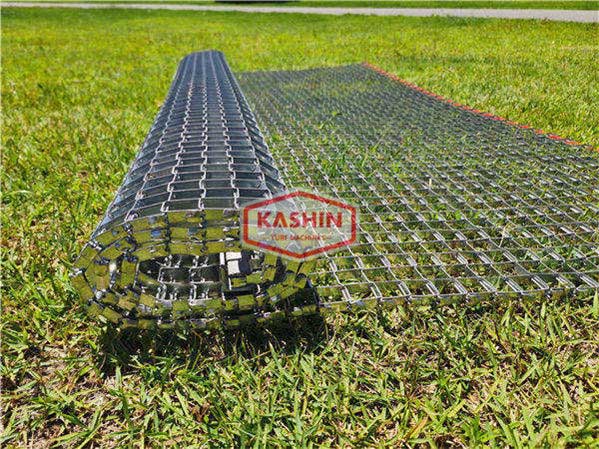
After aeration, apply thin sand topdressing, then use **turf drag mat** pulled by **turf tractor** to spread sand evenly, fill aeration pores and smooth the turf surface.
This process improves soil permeability, accelerates root activity and supports earlier greening.
Field surface leveling cannot be ignored in early spring.
Low spots collect meltwater and rainwater, keeping soil cold and saturated for a long time.
Wet cold soil inhibits root awakening and easily triggers fungal diseases.
The **lazer grader blade** mounted on **turf tractor** can precisely level depressions and undulations, optimize surface drainage and eliminate standing water areas.
Once drainage is improved, soil warms faster, creating a favorable environment for **turf early green up**.
After grading work, use **field top maker** to gently firm the topdressing layer, stabilizing the playing surface without crushing tender new grass crowns.
Fertilizer and irrigation management must follow scientific rules for early spring turf.
Avoid applying high-nitrogen fertilizer too early before soil temperature reaches the threshold.
Excess nitrogen will stimulate weak leaf growth while roots remain undeveloped, making new grass vulnerable to late frost damage.
Select slow-release starter fertilizer with balanced nutrients to feed roots gradually.
Water lightly and only when necessary; overwatering keeps soil cold and increases disease risk.
Use **turf trailer** to transport sand, fertilizer, seed and maintenance supplies efficiently across the whole site during all spring operations.
During the early green-up period, you need to monitor weather forecasts closely.
If late frost is predicted, pause heavy field operations and protect tender turf.
Do not start regular mowing until more than 70% of turf has turned green and new shoots grow steadily.
Stick to the one-third mowing rule to avoid injuring grass crowns.
To sum up, the workflow for **turf early green up** includes winter damage inspection, debris removal with **turf blower**, aeration and topdressing, surface leveling with **lazer grader blade**, soil conditioning with **turf drag mat**, gentle rolling with **field top maker**, and precise nutrient management.
A complete set of attachments matched with reliable **turf tractor** greatly improves working efficiency and ensures uniform greening results.
If you are preparing your turf maintenance plan for the coming spring, contact us to learn more about professional turf equipment solutions for your golf course or sports field.
