Why Roll Turf?

Turf rolling is one of the essential maintenance procedures for high-quality turf areas including golf greens, sports fields, lawn nurseries and racecourses.

Many turf managers wonder why rolling cannot be skipped in regular turf care.

The core purposes of turf rolling include smoothing uneven turf surfaces, improving turf rooting contact with topdressing soil, boosting turf density, creating consistent playing speed for greens, and reducing bumpy spots caused by frost heave, earthworm casts or construction settlement.

A well-rolled turf surface delivers stable ball roll on golf courses and lowers injury risks for athletes on football and rugby fields.

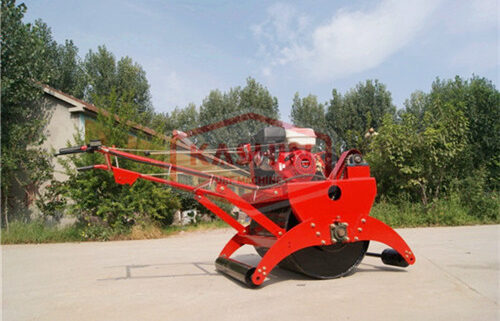
A professional turf roller is engineered to finish this compaction and smoothing task gently without damaging grass crowns.

Most turf rollers adopt a heavy hollow steel or polyethylene drum, which can be filled with water or sand to adjust working weight.

Unlike heavy road rollers, turf rollers feature low ground pressure design.

When the turf tractor pulls the turf roller forward, the rotating drum evenly applies static pressure across the turf surface.

It does not squeeze soil excessively deep; instead, it lightly presses the topsoil and root zone to settle loose topdressing material after top dressing or aeration work.

Some premium models are equipped with scraper blades to prevent soil sticking on the drum surface, keeping rolling uniform across the whole green.

Correct operation determines the final rolling effect and avoids turf damage.

First, choose the right timing: rolling is recommended when the soil is slightly moist but not waterlogged.

Rolling on saturated soil will cause over-compaction and block soil air exchange. Second, set the proper weight.

Golf greens usually use light-weight turf rollers, while sports fields can use medium-weight rollers.

Test on a small hidden area before full-site rolling.

Operate at a low, steady speed, and follow overlapping rolling paths to avoid missed strips.

Do not roll the same spot repeatedly within a single session. After rolling, inspect the turf condition.

Combine rolling with aeration, top dressing and mowing to maintain healthy root zones.

If you are looking for reliable turf rollers matched with your turf tractor for golf and sports turf maintenance, contact our team to get detailed specifications and solutions.

What Are the Benefits of Lawn Topdressing? How Does a Turf Topdresser Work?

For golf courses, football stadiums and large landscape lawns, **lawn topdressing** is an indispensable routine maintenance task, and a professional **turf topdresser** is the core machine to finish this job efficiently.

Many turf managers know they need to spread topdressing material on grass surfaces, but they may not fully understand the multiple benefits of lawn topdressing and exactly how a **turf top dressing machine** operates.

Topdressing means spreading a thin, uniform layer of sand, soil or sand-soil mix over the turf surface.

The first major benefit of **lawn topdressing** is smoothing uneven turf surfaces.

Heavy foot traffic, frequent mowing and turf aeration leave bumps, depressions and uneven ground on putting greens or sports fields. Topdressing fills these low spots, creates a flat playing surface, and reduces scalping damage caused by mowers.

Secondly, regular **golf green topdressing** controls thatch buildup.

Thatch layer blocks water, air and nutrients from reaching grass roots.

The fine topdressing material mixes with the thatch layer, speeds up microbial decomposition and keeps the thatch thickness within a healthy range.

Topdressing also improves soil structure. For clay-heavy soil, sand-based topdressing increases drainage; for sandy soil, organic mix helps retain moisture and fertilizer.

In addition, it protects grass crowns, promotes new leaf growth and speeds up turf recovery after aeration or overseeding.

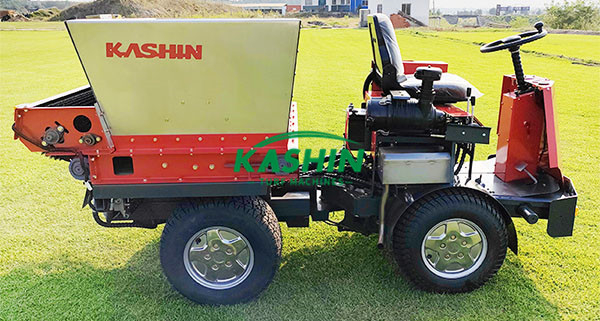
A standard **turf topdresser** is usually designed as a tractor-towed or self-propelled unit.

The machine has a large hopper to store topdressing materials such as sand, rootzone mix or compost.

Inside the hopper, rotating augers or feed rollers meter out material at a controllable rate.

The material drops onto spinning distribution discs, which throw the soil/sand evenly across the lawn surface.

Operators can adjust the material output rate, spreading width and speed according to turf type and job requirements.

A quality **turf top dressing machine** avoids material piling or uneven coverage, preventing smothering of turfgrass.

If you are looking for reliable **turf topdresser** equipment for your golf course or sports turf maintenance project, contact our team to get machine parameters and operation recommendations.

How Does a Lawn Aerator Work? Understand the Core Working Principle of Turf Core Aeration

If you manage golf greens, sports turf or large park lawns, you must have heard of **lawn aerator**, also called **turf aeration machine**.

Many turf supervisors know aeration is essential for healthy grass, yet they do not fully understand how a **core aerator** works underneath the turf surface.

Soil compaction is the biggest enemy of high-quality turf. Constant foot traffic, rolling of turf tractors, repeated mowing and rainfall squeeze soil particles tightly together.

Pores in the soil shrink, oxygen cannot reach grass roots, irrigation water and fertilizer stay on the surface instead of penetrating down.

Over time, turf roots become short and weak, thatch accumulates fast, puddles appear after rain, and the lawn turns yellow and thin easily. This is where a professional **lawn aerator** comes into play.

The mainstream commercial **core aerator** adopts hollow tine design.

Powered by engine or connected with turf tractor as a towed implement, the machine drives hollow metal tines vertically into the turf and root zone.

As tines penetrate the soil, they extract small cylindrical soil plugs, then lift the soil cores out and leave them on the lawn surface.

Uniform holes are created across the turf after the machine passes.

Solid spike aerators only poke holes and squeeze surrounding soil, which may re-close holes quickly.

But the hollow-tine **turf aeration machine** physically removes soil plugs, creating stable vertical channels.

These channels allow air, water and nutrients to flow directly to deep root zones.

The leftover soil plugs will break down naturally, helping decompose thatch and add organic matter back into topsoil.

For golf course aeration work, working depth, tine spacing and operation speed directly affect turf recovery cycle.

Different venues need matched aerator models.

If you are looking for reliable **lawn aerator** equipment for your golf course or sports field maintenance, contact our team to get detailed machine specifications and operation guidance.

Brief Discussion on Annual Maintenance Management Key Points for Bentgrass Putting Green

High-quality **bentgrass putting green maintenance** is the core work for every golf course superintendent.

Bentgrass on putting greens has extremely high requirements for soil structure, surface flatness, moisture, nutrient balance and trimming management.

Tiny unevenness, excessive thatch, poor drainage or compaction will directly affect ball roll, increase disease risk and destroy the overall quality of golf greens.

Many golf facilities struggle with unstable green quality all year round: patchy discoloration, slow recovery after aeration, uneven putting surface and frequent fungal outbreaks.

A complete set of seasonal **golf green turf care** plans, combined with professional turf equipment pulled by **turf tractor**, can keep your bentgrass green smooth, dense and stable through four seasons.

### Spring: Wake up bentgrass, repair winter damage and lay foundation

When snow melts and soil thaws, spring maintenance starts immediately.

First, inspect the whole putting green to check snow mold, dead grass, low-lying waterlogged areas and surface undulations. Dead leaves, straw and organic debris covering bentgrass will block sunlight, reduce soil temperature and delay grass green-up. Use **turf blower** to quickly clear all litter and dead grass residues from the green surface. Manual cleaning takes enormous labor and may hurt fragile bentgrass crowns; **turf blower** can finish large-area cleaning efficiently without damaging turf.

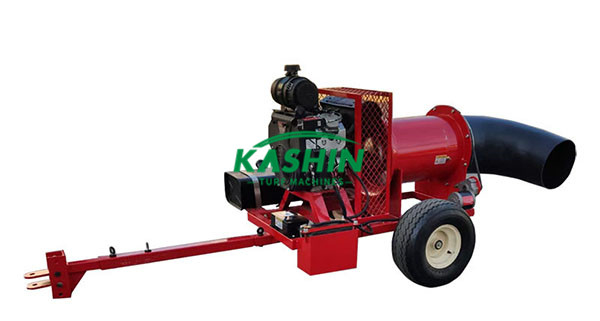
KASHIN turf blower,leaf blower,grass blower

After cleaning, check soil compaction and thatch depth.

Bentgrass greens easily accumulate thatch. When thatch exceeds 10mm, core aeration and light topdressing are necessary. After aeration, apply fine sand topdressing, and use **turf drag mat** pulled by **turf tractor** to spread sand evenly, fill aeration pores and blend sand into bentgrass canopy. This operation dilutes thatch, improves soil permeability and helps roots activate faster.

Check surface drainage in early spring.

Melting snow and spring rain easily gather in depressions, leading to root rot of bentgrass. The **lazer grader blade** mounted on **turf tractor** can precisely level small bumps and low spots of putting greens, optimize surface slope and eliminate standing water. After grading, use **field top maker** for gentle rolling, stabilize the topdressing layer and create a smooth putting plane without compacting the root zone. During spring renovation, **turf trailer** helps transport fine sand, fertilizer and seeds conveniently.

Fertilization in spring must be controlled strictly.

Do not apply high nitrogen fertilizer too early. Choose slow-release starter fertilizer to promote root growth instead of fast leaf growth. Keep following the one-third mowing rule and gradually reduce mowing height as bentgrass grows steadily.

### Summer: Heat stress control, disease prevention and surface protection

Summer high temperature is the biggest threat for bentgrass.

Bentgrass is cool-season turf, vulnerable to heat stress. Raise cutting height slightly in hot weather to protect grass crowns. Reduce nitrogen application, increase potassium supply to improve heat resistance. Water deeply in early morning instead of frequent shallow irrigation, avoid long-time leaf wetness to prevent brown patch and dollar spot disease.

Carry out light needle-tine aeration in summer to relieve mild compaction, avoid heavy hollow coring which causes long recovery time.

Inspect putting green surface every day, repair ball marks and divots timely. Before golf tournaments, use **field top maker** to refine surface smoothness, guarantee consistent ball roll for players. Clean grass clippings and dew residue with **turf blower** every morning.

### Autumn: Thatch reduction, root reserve accumulation for winter

Autumn is the golden period for bentgrass to store nutrients and strengthen roots.

Carry out core aeration and topdressing again for greens with thick thatch. Use **turf drag mat** to spread sand dressing uniformly. Remove fallen leaves continuously with **turf blower**, because fallen leaves cover bentgrass and easily trigger snow mold in winter.

Switch fertilizer formula to high-potassium winter fertilizer, reduce nitrogen dosage gradually. Slowly raise the mowing height as temperature drops.

Clean drainage channels, check surface flatness, repair small depressions by **lazer grader blade** before winter arrives. Use **turf trailer** to transport sand and maintenance supplies for autumn turf renovation.

### Winter: Dormancy protection & equipment maintenance

Bentgrass enters dormancy in winter. Avoid heavy machine driving and foot traffic on frozen putting green.

Pressure on frozen bentgrass crowns will form large dead patches in spring. During off-season, inspect and maintain your whole equipment fleet: **turf tractor**, **turf drag mat**, **lazer grader blade**, **field top maker**, **turf blower** and **turf trailer**. Repair and replace worn parts, so you can start spring **bentgrass putting green maintenance**

Scientific Turf Management Strategies to Promote Early Spring Turf Green Up for Golf & Sports Fields

Every golf course superintendent and sports turf manager looks forward to earlier, uniform **turf early green up** after cold winter dormancy.

When turf turns green ahead of schedule, sports venues can open earlier, host pre-season training and competitions sooner, and improve the overall image of golf facilities.

However, early greening of turf does not happen by chance.

Blind fertilization and hasty field operations often lead to frost damage, shallow root growth, disease outbreaks and uneven greening.

Only systematic, scientific **early spring turf management** can safely wake dormant turf, accelerate grass recovery and achieve consistent green coverage across the whole field.

The whole spring revival process relies on professional agronomic steps and supporting turf maintenance equipment operated by **turf tractor**.

Winter damage assessment is the first critical step before carrying out any turf revival work.

Once snow melts and soil thaws completely, walk through the entire field to check for snow mold, dead grass patches, low-lying waterlogged zones, compacted areas and leftover organic debris.

Fallen leaves, dead grass stems and twigs covering the turf canopy block sunlight, trap moisture and slow soil warming.

If these organic residues are not removed, grass crowns cannot receive enough solar heat, which directly delays **turf early green up**.

At this stage, **turf blower** is the most efficient tool for large-area spring cleanup.

It quickly blows away dead leaves, grass litter and aeration plugs left over from last autumn, opening up the turf canopy so sunlight can reach the soil surface and raise soil temperature faster.

Soil condition is the core factor determining how fast turf greens up.

Long-term foot traffic and frozen pressure in winter cause severe soil compaction.

Compacted soil lacks air circulation, water and nutrients cannot penetrate down to root zones, and grass roots stay inactive.

For high-traffic zones such as goal boxes, tee boxes and walk paths, light core aeration should be arranged when soil temperature rises slightly.

After aeration, apply thin sand topdressing, then use **turf drag mat** pulled by **turf tractor** to spread sand evenly, fill aeration pores and smooth the turf surface.

This process improves soil permeability, accelerates root activity and supports earlier greening.

Field surface leveling cannot be ignored in early spring.

Low spots collect meltwater and rainwater, keeping soil cold and saturated for a long time.

Wet cold soil inhibits root awakening and easily triggers fungal diseases.

The **lazer grader blade** mounted on **turf tractor** can precisely level depressions and undulations, optimize surface drainage and eliminate standing water areas.

Once drainage is improved, soil warms faster, creating a favorable environment for **turf early green up**.

After grading work, use **field top maker** to gently firm the topdressing layer, stabilizing the playing surface without crushing tender new grass crowns.

Fertilizer and irrigation management must follow scientific rules for early spring turf.

Avoid applying high-nitrogen fertilizer too early before soil temperature reaches the threshold.

Excess nitrogen will stimulate weak leaf growth while roots remain undeveloped, making new grass vulnerable to late frost damage.

Select slow-release starter fertilizer with balanced nutrients to feed roots gradually.

Water lightly and only when necessary; overwatering keeps soil cold and increases disease risk.

Use **turf trailer** to transport sand, fertilizer, seed and maintenance supplies efficiently across the whole site during all spring operations.

During the early green-up period, you need to monitor weather forecasts closely.

If late frost is predicted, pause heavy field operations and protect tender turf.

Do not start regular mowing until more than 70% of turf has turned green and new shoots grow steadily.

Stick to the one-third mowing rule to avoid injuring grass crowns.

To sum up, the workflow for **turf early green up** includes winter damage inspection, debris removal with **turf blower**, aeration and topdressing, surface leveling with **lazer grader blade**, soil conditioning with **turf drag mat**, gentle rolling with **field top maker**, and precise nutrient management.

A complete set of attachments matched with reliable **turf tractor** greatly improves working efficiency and ensures uniform greening results.

If you are preparing your turf maintenance plan for the coming spring, contact us to learn more about professional turf equipment solutions for your golf course or sports field.

A Complete Seasonal Turf Management Plan for Golf Courses and Sports Fields

High-quality professional turf management is never a one-time job, but a year-round systematic program tailored to local climate, grass varieties and field usage intensity.

For golf courses, football pitches, rugby grounds and multi-purpose sports complexes, stable, resilient turf directly impacts player safety, game experience and the overall aesthetic value of the venue.

Many grounds supervisors often encounter recurring problems: patchy grass growth, poor underground drainage, serious soil compaction, excessive thatch accumulation and slow turf recovery after heavy foot traffic.

A scientific seasonal sports turf maintenance schedule, combined with supporting professional turf machinery, can effectively cut long-term turf renovation costs, reduce chemical input, and greatly extend the service life of your sports turf.

Spring is the critical recovery window for turf to wake up from winter frost and dormancy. Once snow and frost fully disappear, the first step is to carry out a comprehensive field inspection.

Walk through every zone of the whole site, carefully mark dead grass patches, poor drainage areas, surface low spots, and regions with severe soil compaction.

Frost damage often hides under the grass canopy; starting mowing or heavy field work too early will tear fragile grass crowns and leave permanent bare spots that take months to repair.

When soil temperature steadily rises to the suitable range for grass activity, you can begin core aeration to relieve soil compaction.

Aeration creates pores inside soil, boosts oxygen infiltration, stimulates deep root development and improves water and nutrient absorption.

Right after aeration work, sand-based topdressing is usually applied. Use turf drag mat pulled by turf tractor to spread the topdressing material evenly across the whole field, working sand into aeration holes to accelerate turf healing.

Meanwhile, turf blower quickly clears soil plugs, broken grass and surface debris generated in aeration, saving massive manual cleaning time.

If there are obvious undulations and sunken areas on the field surface, the lazer grader blade will help level the ground accurately, preventing rainwater pooling and muddy patches in the upcoming rainy season.

For cool-season grass varieties, overseeding should be arranged after aeration and topdressing. Select grass seeds matching local climate and field wear level.

Apply balanced starter fertilizer that prioritizes root development instead of fast leaf growth.

Set up reasonable irrigation plans for light and frequent watering, to keep seedbed moist without washing seeds away.

Follow the classic one-third mowing rule: never cut more than one-third of the grass blade height in a single mowing operation.

Summer brings high temperature, strong sunlight, heavy match schedules, high disease pressure and water shortage, which are the biggest challenges of sports turf maintenance.

You need to slightly raise the mowing cutting height to protect the root zone from sunburn.

Lower cutting height under hot weather will increase heat stress and weaken turf resistance sharply. Check thatch thickness every week.

Thick thatch locks extra moisture and creates favorable conditions for fungal diseases such as brown patch and dollar spot. Light vertical mowing can reduce organic buildup without hurting healthy turf roots.

Irrigation management decides turf survival in summer.

Deep and infrequent watering encourages roots to grow down deeper, unlike short daily sprinkling that keeps roots staying on the shallow surface.

Watering should be scheduled in the early morning, which reduces water evaporation and avoids long-time leaf wetness overnight to control disease risk.

For high-traffic sports fields, arrange regular rest periods between competitions to reduce continuous wear. Before major tournaments, use field top maker to gently roll and finish the surface, maintaining stable firmness and smoothness for matches.

Autumn is the best season to build nutrient reserves and strengthen turf roots before winter dormancy. Many field teams ignore autumn maintenance work and suffer weak turf recovery in the next spring.

For heavily used sports fields, secondary aeration and topdressing can be carried out again to repair thin grass zones. Fallen leaves must be removed regularly by turf blower.
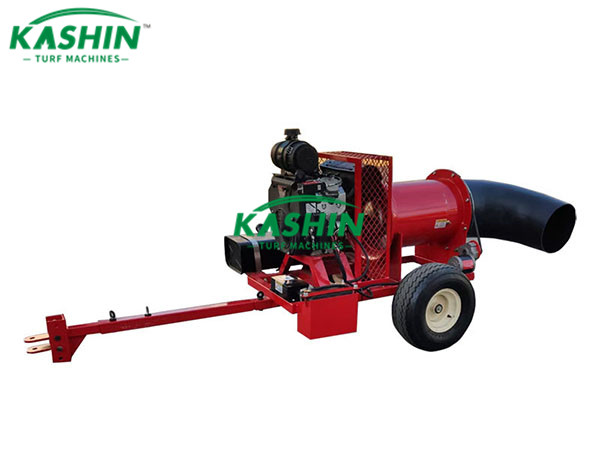
Leaf cover blocks sunlight, traps moisture on grass blades and easily causes mold and winter kill. Switch fertilizer formula to high potassium and low nitrogen blend; potassium thickens grass cell walls and improves cold resistance and disease tolerance.

Gradually lower mowing height as grass growth slows down, and stop mowing completely once turf stops growing. Clean drainage ditches and inspect field surface.

Use grading equipment to fix low spots, to guarantee rain and melting snow can drain freely instead of accumulating on turf. During autumn material transportation, turf trailer is very practical to carry sand, seeds and maintenance supplies around the whole facility efficiently.

Turf enters dormancy in winter, but turf management work does not stop.

Avoid running heavy equipment or allowing excessive foot traffic on frozen turf. Pressure on frozen grass crowns will crush grass tissue and lead to large dead spots in spring.

Remove ice and snow carefully; do not use harsh deicing salt that burns turf roots. Take this off-season opportunity to inspect, maintain and repair your turf tractor and all supporting attachments, including lazer grader blade, turf drag mat, field top maker, turf blower and turf trailer.

Winter is also the perfect time to collect soil samples, adjust the nutrient plan for the next year, and pre-order seed and topdressing materials before the busy peak season arrives.

A mature turf management plan balances agronomy knowledge and mechanical operation.

Investing in professional turf equipment improves work efficiency and brings consistent results that manual work cannot match.

For commercial sports facilities and golf courses, combining seasonal agronomic practices with reliable turf machines helps maintain playable turf all year round, cuts renovation frequency and greatly upgrades player experience.